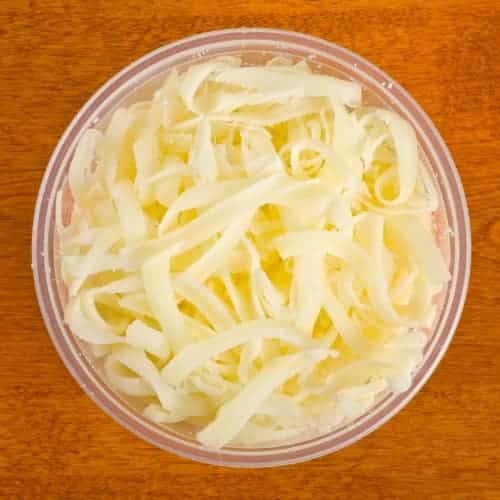
A lot of people who read our recipes and watch our YouTube videos ask us the same question: “How many cups of mozzarella cheese are in one pound?”
It’s a common conversion in recipes, but the answers online aren’t always consistent. If you’ve ever wondered how many cups in a pound of cheese, you’re definitely not alone.
To be honest, we didn’t know the exact answer either. The online calculators were mostly accurate, but we decided to run our own little experiment to see for ourselves.
We promise the information here is as accurate and practical as it gets for your kitchen.
We went through all the steps, used all the tools, and did everything perfectly so you can easily do this for yourself at home. We got the tools necessary, measured and weighed the ingredients, and made this as perfect as possible.
Here’s how we did it!
*Don’t feel like reading? We recorded our process in a Youtube video, which you can watch below!*
What we used
*Disclaimer, we ran this experiment using measurements from the United States Customary System rather than the Metric System.
To run our little experiment, we used a handful of common kitchen tools to help us get to our answer.
We’d recommend you use these tools too if you wanted to run the experiment yourself.
The most obvious contender (besides the cheese) is a food scale.
You can get these at Target or Walmart, or even on Amazon. Make sure you set the weight setting to pounds, as most food scales come pre-set to ounces. If you accidentally record pounds of cheese as ounces of cheese, consider yourself doomed and start the whole process over.
Now, let’s talk cheese. It’s important to use a low moisture whole milk mozzarella cheese. You’ll often find these qualities in lots of semi-hard cheeses.
For this, we always recommend Grande Cheese.
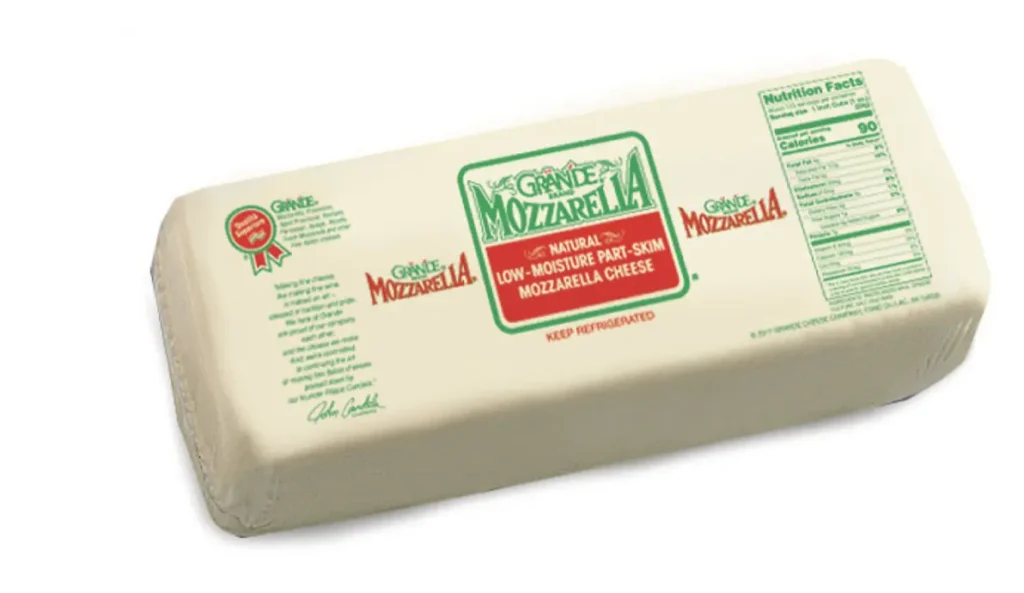
This is the kind of Italian cheese we use on our pizza, our mozzarella sticks, and many many other recipes in the restaurant.
Get this at the grocery store, or use a grocery delivery service to get it sent straight to your house (not without paying a delivery fee, of course).
This isn’t an incredibly soft cheese, but it is soft enough to give you that creamy mozzarella taste you want, but hard enough for you to easily grate.
Which, speaking of cheese grating, brings us to our next tool:
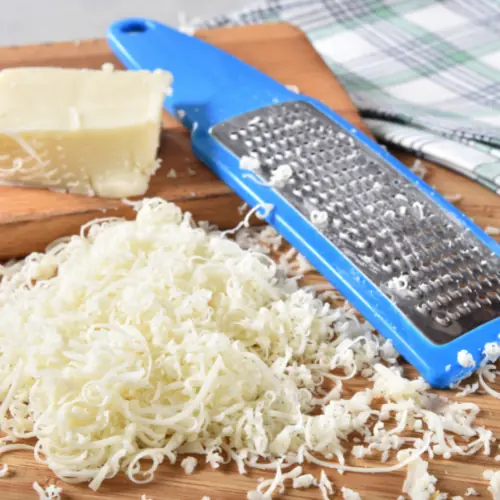
A big old cheese grater.
Honestly, though, there are easier tools to use than this that we thought about after the fact.
Save yourself some time and use a food processor, or a cheese grater plug-in for a Kitchenaid mixer. You can get freshly grated cheese in about a quarter of the time it takes to grate it by hand, which sounds like a win win to us.
Next up comes the handy dandy measuring cup.
In terms of measuring cups, we actually like to break this down as much as possible to get the most accurate information when recording each cup of mozzarella.
We’d recommend going with ¼ cups or ½ cups; either is fine. We used ½ cups for this, and it ended up being perfect.
Last but not least, get a big bowl to put all of the cheese in.
Let’s get measuring!
How we measured everything
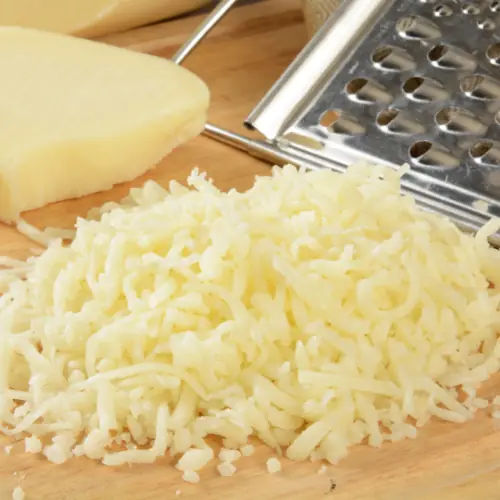
First things first, low moisture whole milk mozzarella cheese comes in massive packages that easily weigh over one pound.
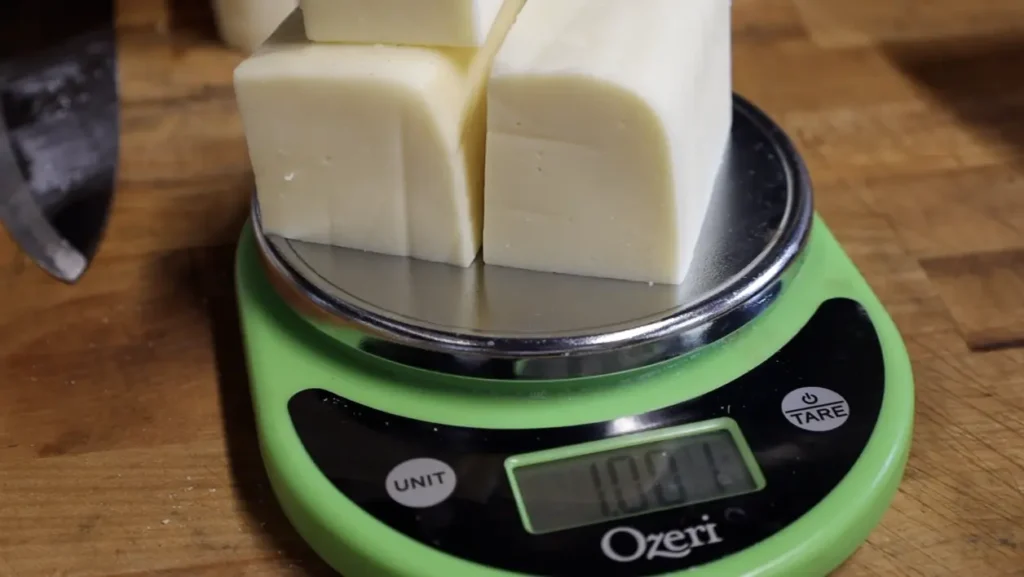
Rather than playing the guessing game with too much cheese or dividing your numbers into a pit of doom, cut off smaller amounts of cheese and weigh those, adding everything to the scale one by one until you get to 1lb.
These are the cubes from the cheese block that you will be grating.
If you have a cheese grater, use the largest grate size when grating this by hand.. They grate the cheese faster and larger than the smaller holes, making it much easier for you to do on your own.
Of course, if you have a food processor or cheese grater Kitchenaid attachment, use these. They’ll give you freshly grated cheese in seconds, which will cut down a ton of time when running this experiment yourself.
Once you have your cheese grated, it’s time to put your measuring skills to the test.
Again, we used ½ cups to measure the cheese, but you’ll get the same amount of accuracy from using ¼ cups.
Fit grated cheese into each cup, leveling everything off slowly before you count the measurement. We put the measured cheese into a large bowl, but you can use a cutting board, a plate, whatever is easiest.
Our answer
Measuring and leveling everything off perfectly, it took us exactly 4.5 cups to go through the entire pound of cheese.
Which gives us our answer:
There are 4.5 cups of mozzarella cheese in one pound.
Do with this information as you will.
Convert it to ounces or fluid ounces of cheese, or any other conversion factors that you can think of by using a unit converter.
Use it to make your life easier when looking up recipes. Reference it when you’re eating shredded cheese by the handful. Whatever works for you, just know that this information is as accurate as you can possibly get.
WTF do I do with all of this shredded cheese?
There are many things you can do with all of this fresh mozzarella.
Toss it together with some basil, olive oil, balsamic, and tomato to make your family some delicious Caprese salads.
Serve it over your favorite pasta with tomato or vodka sauce to add some cheesy goodness to your meals.
Use this shredded mozzarella instead of your favorite store-bought cheese blend when making pizza (it tastes much better fresh, trust us.)
Eat it by the handful. It’s a good source of calcium.
For some easy ideas for Mozzarella cheese, be sure to check out all of our own recipes.

What is the best type of mozzarella to buy?
This is a tough question. There are many great brands of mozzarella cheese on the market.
Look for a whole milk mozzarella. In the supermarket they usually sell a 16 oz block of cheese.
At a restaurant supply house or distributor you can get a 5-6 pound block of cheese.
I like buying block cheese as opposed to shredded because when you shred it yourself you end up with a better product.
When you buy cheese that is already shredded it is usually coated in potato starch or other added agents to prevent clumping and sticking.
I also like buying blocks of cheese because you can cut it to the size of your choice.
When I make a cheese board or even when I make pizza at home I like cutting it into cubes. I usually cut them the size of a pair of dice. The amount of cheese you can fit into a cup will be different when you cube it.
Cups of cubes will yield less cheese to the corresponding ounces of shredded mozzarella.
Here’s a little tip. When you make a cheese board, the proper serving size per person is about 3 oz of cheese.
Do These Measurements only Apply to Mozzarella Cheese?
No. You can follow this guide for any cheese that comes in a block or shredded. This advice can be used for cheddar cheese or any similar cheese product.
For example, a pound of cheddar cheese can be treated like a pound of mozzarella cheese.
It will not work for a crumbly cheese such as blue cheese.
*Note: This experiment was done using low moisture whole milk mozzarella cheese. Not parmesan cheese, not bleu cheese, mozzarella cheese. The exact amount of cheese in a pound may be different depending on the kind of cheese you use, and using this measurement on anything other than mozzarella cheese may affect the overall outcome of a recipe.
Frequently Asked Questions:
Q: Does it matter if the cheese is freshly shredded or pre-shredded?
A: Yes, it can. Freshly shredded mozzarella tends to be fluffier and less compact, while pre-shredded cheese can settle more in a measuring cup. That can slightly change the final cup measurement.
Q: How many cups in a pound of cheese if it’s grated very fine?
A: If it’s grated very fine, it may pack down more tightly in the cup. When people ask how many cups in a pound of cheese, the shred size actually makes a small difference in volume.
Q: Should I measure mozzarella by weight or by cups?
A: If a recipe gives you the option, weight is always more accurate. Cups are convenient, but using a kitchen scale gives you consistent results every time.
Q: Is the cup measurement the same for fresh mozzarella balls?
A: Not exactly. Fresh mozzarella contains more moisture and doesn’t shred the same way, so it won’t measure out the same as low-moisture shredded mozzarella.
Q: Can I substitute another cheese using the same cup measurement?
A: Sometimes, but not always. Different cheeses have different densities, so one cup of cheddar may not weigh the same as one cup of mozzarella.
Measure with Confidence Every Time
Now you don’t have to guess the next time a recipe calls for mozzarella. Knowing how many cups in a pound of cheese makes it easier to prep for pizza night, lasagna, or any cheesy dish without second-guessing yourself. Whether you’re shredding it fresh or grabbing a bag from the store, a little measuring knowledge goes a long way in the kitchen.
If this guide helped, drop a comment and let me know what you’re making with all that mozzarella. And if you’d rather skip the measuring and just enjoy great Italian food, visit the Mortadella Head store here: https://mortadellaheadstore.com/.